The Missing Infrastructure for Institutional Blockchain

The Bank Vault That Learned to Talk to DeFi
Picture this: You're a bank in São Paulo. Your clients trust you with their money because you keep their financial lives private, comply with every regulation, and never let their data leak.
Now imagine someone tells you to put all that on a public blockchain where everyone can see everything.
Yeah, that's not happening.
This is the trillion-dollar standoff between traditional finance and crypto. Banks want blockchain's efficiency and 24/7 settlement. Crypto promises transparent, permissionless finance. But traditional finance literally cannot operate in public view since regulations forbid it, clients would revolt, and internal controls would collapse.
Enter Rayls, which asked a different question: What if banks could have their cake and eat it too?
The Vault That Connects
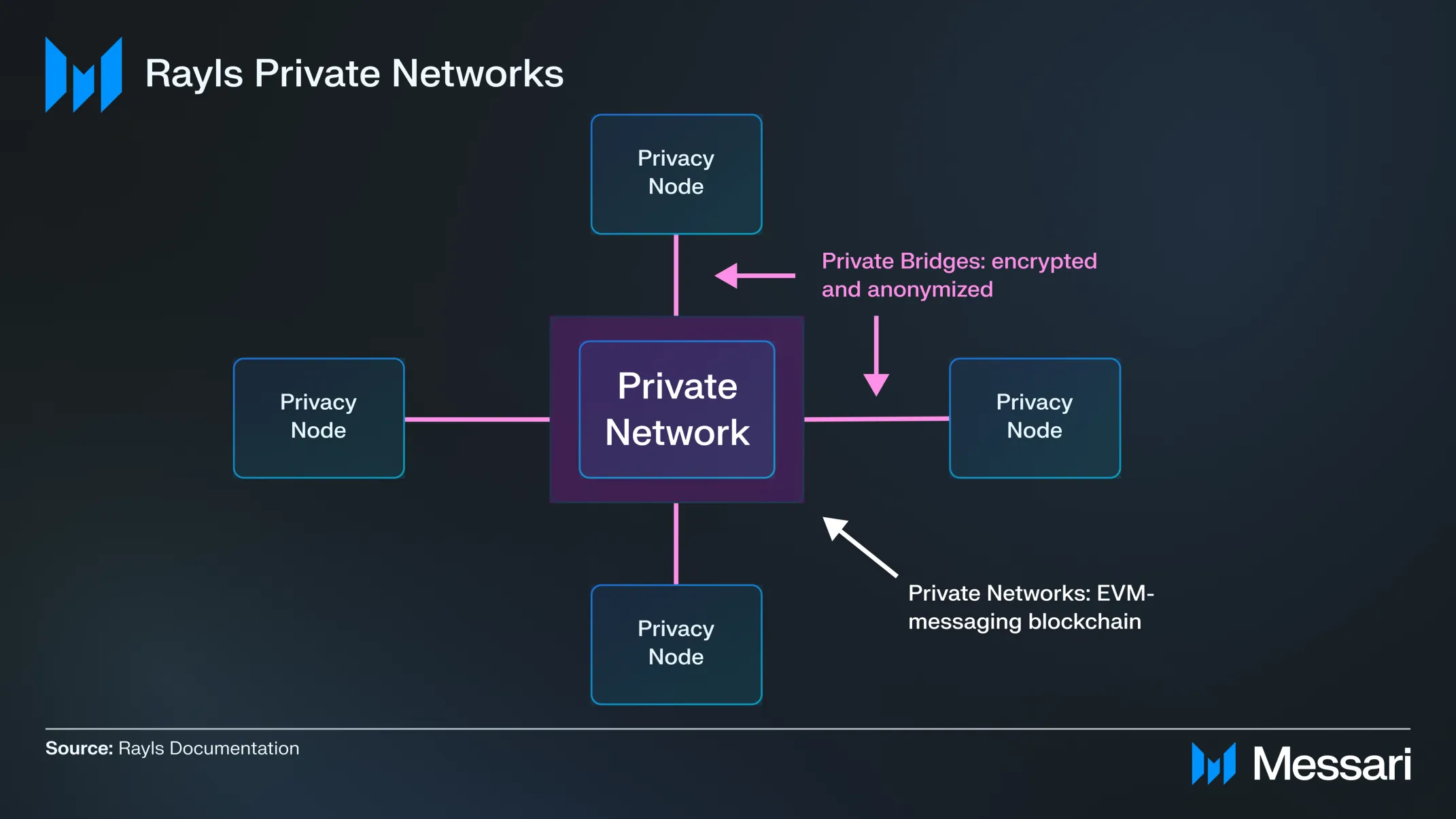
Think of Rayls like this: Every bank gets its own digital vault that sits behind their firewalls just like their current systems. They control everything. They enforce their rules. They keep client data locked down tight.
But here's the clever part: these vaults can talk to each other through encrypted tunnels called Private Networks. And when they need to, they can even peek out into the wild world of public DeFi through the Rayls Public Chain.
It's like having a secret society of banks that can whisper to each other in code, while occasionally sending a messenger to the town square when needed.
In June 2024, something remarkable happened in Brazil. Nuclea, a financial infrastructure company, became the first institution to flip the switch on Rayls Sovereign. Not a demo. Not a pilot. Production.
Today, they're processing 40,000 tokenized credit receivables every month. That's real money, real assets, real clients, all flowing through blockchain rails while maintaining the privacy and compliance standards that traditional finance demands.
Think about that for a second. While much of crypto Twitter was arguing about the next memecoin, a Brazilian company was quietly tokenizing tens of thousands of real financial assets monthly using infrastructure that didn't exist two years ago.
The Technology That Makes Privacy Possible
The secret sauce is Enygma, Rayls' privacy framework. Using zero-knowledge proofs, it lets institutions validate transactions without revealing who sent what to whom. It's like a bouncer checking IDs in a dark room, they confirm everything's legitimate without actually seeing anyone's face.
Even cooler? They've built in post-quantum cryptography. While most of us are still figuring out what quantum computers might do someday, Rayls is already protecting against them.
When Institution A wants to send tokens to Institution B, here's what happens: The transaction gets encrypted using keys only those two parties hold. The network validates everything using cryptographic proofs confirming the transaction is legit, preventing double-spending, enforcing rules, all without ever peeking inside. Only the sender, receiver, and (if required) designated auditors can decrypt what actually happened.
It's financial privacy with regulatory transparency when needed. The best of both worlds.
The Bridge to DeFi
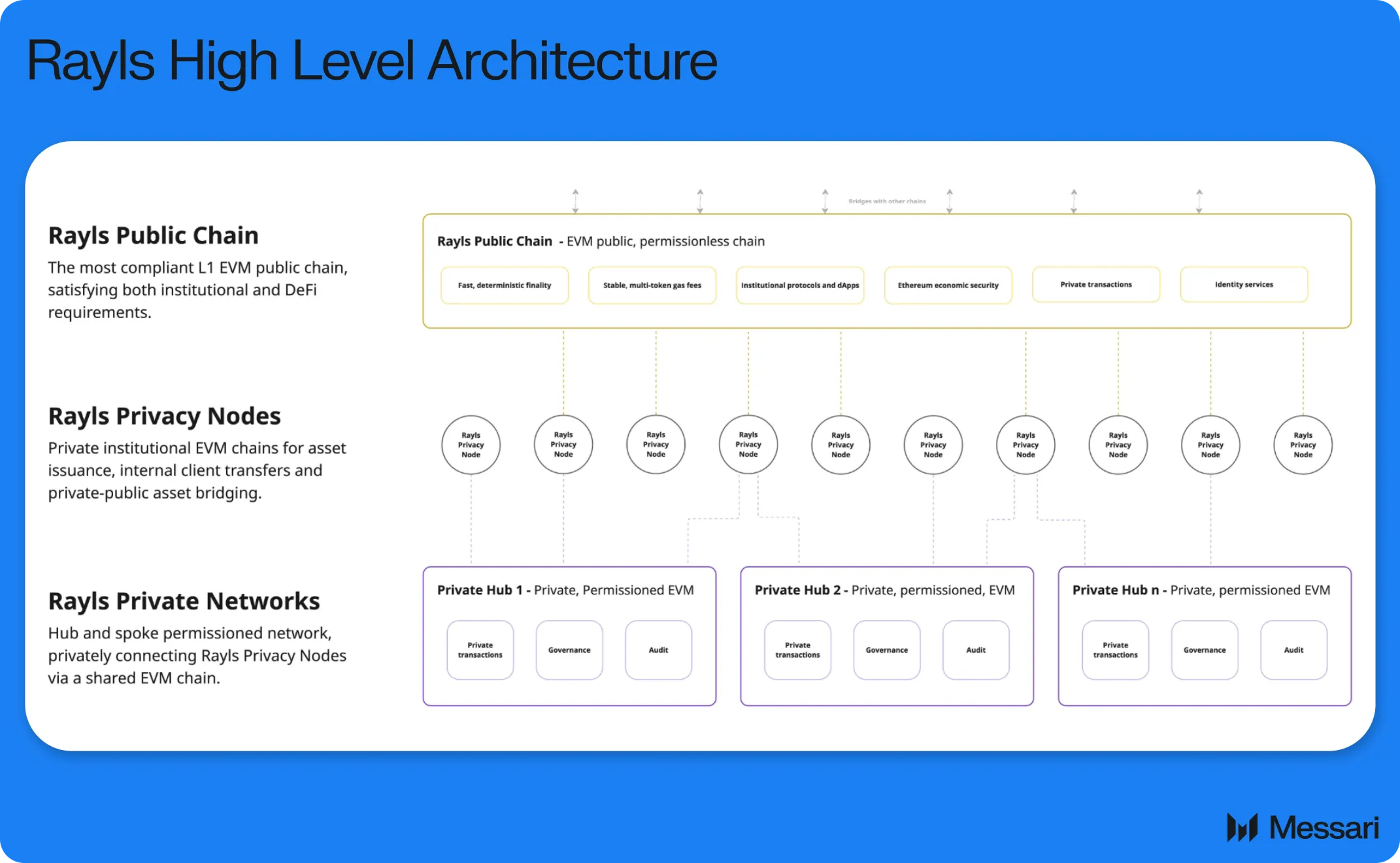
But Rayls didn't stop at letting institutions talk to each other privately. The Rayls Public Chain, launching mainnet in 2026, is where things get interesting.
Imagine a tokenized private credit fund sitting safely in a bank's Privacy Node. Traditionally, only the bank's approved clients could access it. But what if that fund could distribute yield to DeFi users? What if institutions could tap into liquidity pools without exposing their internal operations?
The Public Chain makes this possible. Institutions can lock assets in their private vaults and mint corresponding tokens publicly for controlled distribution. It's like having a safety deposit box at the bank that can occasionally dispense coins to people outside.
In December 2025, this vision got a billion-dollar vote of confidence when AmFi, a private credit tokenization platform, committed to issuing $1 billion in tokenized real-world assets on Rayls by 2027.
Why This Matters Beyond Crypto
Here's the uncomfortable truth about blockchain adoption in traditional finance: Most institutions don't want decentralization. They want programmable money, instant settlement, and composable assets but they need privacy, compliance, and control.
For years, the crypto industry tried to convince banks to change. Rayls flipped the script. Instead of asking institutions to abandon their requirements, it built infrastructure that meets them where they are.
The result? Actual adoption. Real assets moving onchain. Traditional institutions experimenting with DeFi without betting their banking licenses.
The Bigger Picture
Rayls represents something quietly revolutionary: proof that you don't have to choose between blockchain efficiency and institutional requirements. That the future of finance might not be "DeFi wins" or "TradFi wins" but rather "TradFi and DeFi learn to speak the same language."
While 40,000 monthly transactions in Brazil might not make headlines like a new L2 raising $100 million, it represents something more valuable: sustainable infrastructure solving real problems for institutions with real assets and real regulatory obligations.
The secret tunnels are being built. The vaults are learning to talk. And somewhere in São Paulo, thousands of credit receivables are flowing through blockchain rails every month while maintaining the privacy traditional finance demands.
That's infrastructure for a financial system that works in the real world.
Read the full Messari report to learn more!
Subscribe to our newsletter